Ip Hider Pro 〈Legit - MANUAL〉
Ip Hider Pro 〈Legit - MANUAL〉
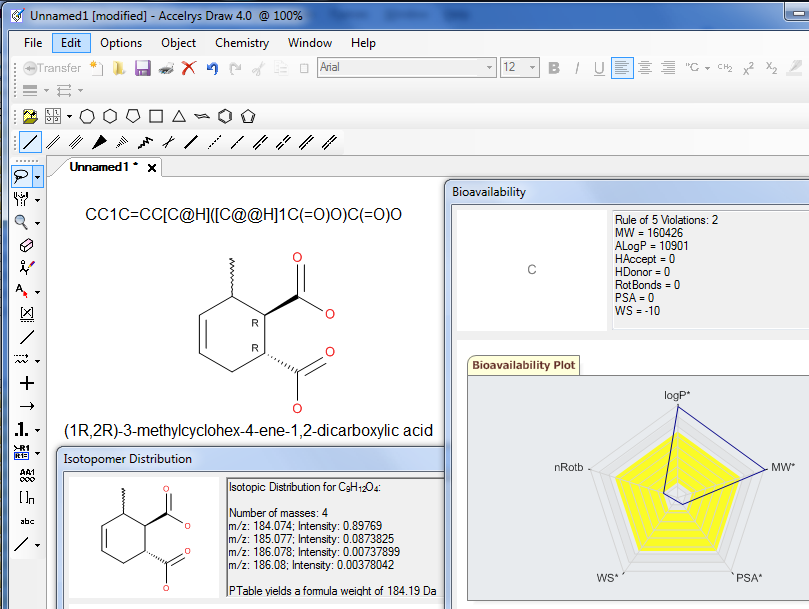 |
With the
same look-and-feel as ISIS/Draw, Accelrys Draw delivers speed and
efficiency to your chemical drawing experience.
Accelrys Draw can easily swap out existing ISIS/Draw or ChemDraw applications. |
|
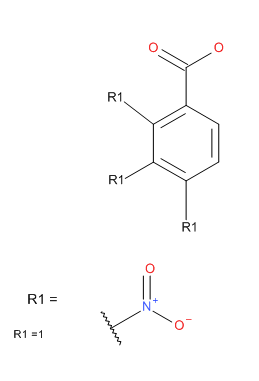
Ip Hider Pro 〈Legit - MANUAL〉Click here for more details about Rgroups, an example, and a detailed procedure how to draw a Markush query. To draw a Markush query:
|
|
|
| Generic Structure
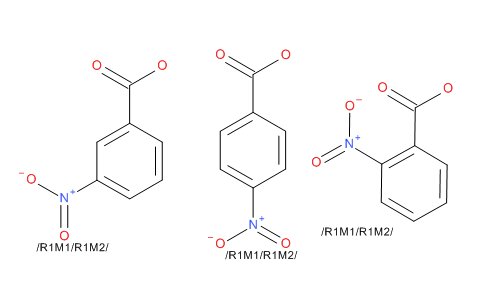
Enumerator The enumerator works against structures defined using the Rgroup tool in Accelrys Draw. In this mode you specify a scaffold with a number of Rgroup labels, then to add fragments to the Rgroup identifiers. The Add-in will calculate the complete set of structures that the Rgroups define. You can also define a generic region using the Sgroup tool. Draw the basic structure and using the Sgroup tool, drag a pair of brackets around a region that is repeated in the substance. From the dropdown select ‘generic’ for the bracket type, then select apply and exit from the dialog. Right click on one of the brackets and select the Attach Data option. In the dialog enter REPEATRANGE into the Field description box, and then enter the range in the Data box; leave the Search Operator set to none; the Tag field is optional. A contiguous range is required in the Data box, for example 3-6. A structure can contain both Rgroup definitions and Sgroup definitions, but they cannot overlap or be nested. You have the option to enumerate on to Accelrys Draw’s canvas, into an SDfile, or into an Isentris for Excel compatible spreadsheet. |
 |
|
Ip Hider Pro 〈Legit - MANUAL〉In this light, the term "IP Hider Pro" becomes a nostalgic artifact, like a "telephone scrambler" in the age of Signal. The professional no longer asks "Can you hide my IP?" but "Can you make me look like everyone else using this service?" IP Hider Pro is a powerful tool within a narrow scope: it defeats casual surveillance, content geo-blocks, and simple DDoS attacks. It fails against state-level correlation, browser fingerprinting, and legal coercion of the provider. The "Pro" denotes not invincibility, but competence —the inclusion of kill switches, leak protection, audited no-logs, and residential IPs. 1. The Illusion of Location: Beyond the "On/Off" Switch At its core, an "IP Hider Pro" operates on a fundamental paradox of the internet: you cannot participate without revealing your origin, yet you cannot be secure if that origin is permanent. The tool does not truly hide your IP in the sense of deletion; rather, it performs a sophisticated act of digital ventriloquism. It interposes a proxy or VPN server between your device and the destination host, making the server’s IP address visible while your own recedes into the mechanical shadows. ip hider pro Ultimately, using an IP hider is an act of digital adulthood: accepting that anonymity is a spectrum, not an absolute, and that the mask you wear is only as strong as the hand that holds it. In this light, the term "IP Hider Pro" |
http://accelrys.com/products/informatics/cheminformatics/draw/add-ins.html | |
Chemical Drawing Programs – The Comparison of Accelrys (Accelrys) Draw, ChemDraw, DrawIt, ACD/ChemSketch and Chemistry 4-D DrawUniversity of Debrecen, POB 70, H-4010 Debrecen, Hungary, e-mail: Last major update : 1.11.2011 If you have any comment, do not hesitate to contact the author at the above adress. |
http://dragon.klte.hu/~gundat/rajzprogramok/dprog.html |